


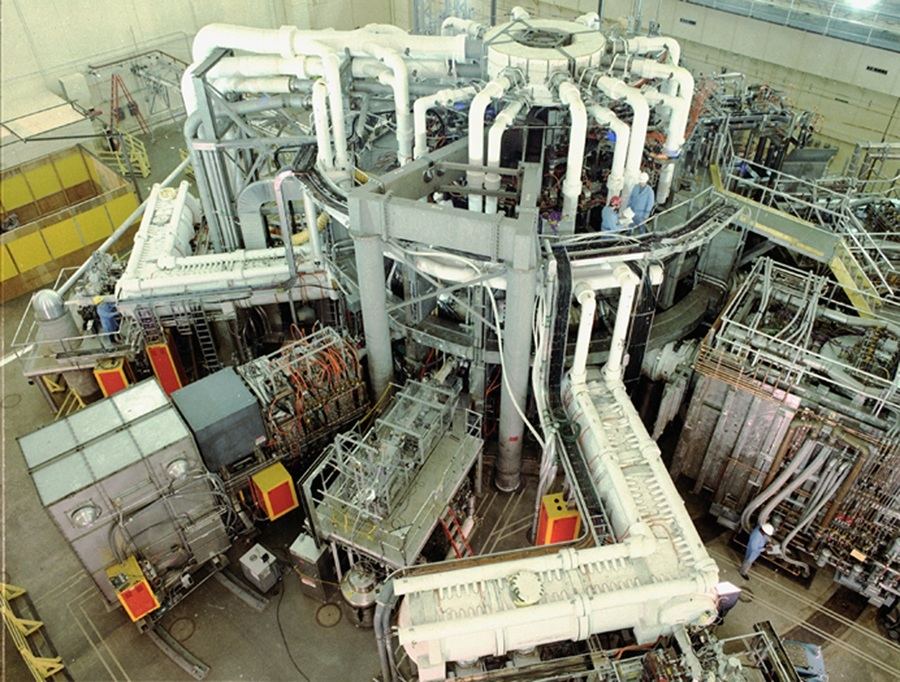
The Sun shines because light atoms fuse together in its core, releasing enormous amounts of energy. For decades, scientists have tried to repeat that process on Earth, hoping to create a source of power that is clean, abundant and free from the long-lived waste of today’s nuclear plants. Inside a fusion reactor, hydrogen fuel is heated to temperatures hotter than the centre of the Sun until it becomes a plasma, a swirling gas of charged particles. Powerful magnets hold the plasma away from the walls of the chamber while it is squeezed and heated further, until the atoms begin to fuse. The main challenge is keeping the plasma stable and hot for long enough to produce more energy than the machine consumes. Several large experiments around the world are now pushing toward that goal, and smaller private companies have joined the race with new designs. The prize is a power source that could run for centuries on fuel drawn from ordinary seawater.
What the Evidence Shows
Progress has been steady rather than sudden. In recent years, major facilities have set new records for the amount of energy released in a single fusion pulse, and for how long the plasma can be held in a stable state. Each record teaches engineers more about controlling the plasma, managing the intense heat on the reactor walls and breeding the fuel the reaction needs. The fuel itself is plentiful, since it can be drawn from seawater and from lithium, which is widely available. The remaining hurdles are largely practical: building machines that can run continuously, survive years of bombardment by energetic particles, and produce power at a price that competes with other sources. Researchers stress that commercial fusion is still years away, but the path from laboratory curiosity to working power plant is now clearer than it has ever been. Reporting and analysis from sources such as NASA track the same developments, and specialists following the fusion reactors chasing the power of the sun say the direction is now consistent across independent lines of evidence.
The Wider Context
Funding bodies are watching the fusion reactors chasing the power of the sun closely because the work sits at the junction of basic curiosity and practical return. Grant panels increasingly ask for a path from discovery to application, while researchers push back that the most valuable uses of fundamental science are rarely the ones written into the original proposal. The tension is productive when both sides stay honest about timescales.
What Happens Next
The long view on the fusion reactors chasing the power of the sun is that fields advance by accumulation rather than by single announcements. This result adds a solid, checkable piece to a structure many teams are building, and its authors have shared their data so the piece can be tested from every side. That is how the picture eventually becomes reliable enough to act on. You can follow related developments in our coverage of science.
It is also worth remembering how quickly the picture in this area has changed before. Positions that looked settled a few years ago have been revised as new data arrived, and the same humility is appropriate now. The strongest coverage of this subject, and the most useful advice, tends to come from sources that update their views openly when the facts move, rather than defending an earlier position long after it has stopped fitting the evidence available.
