


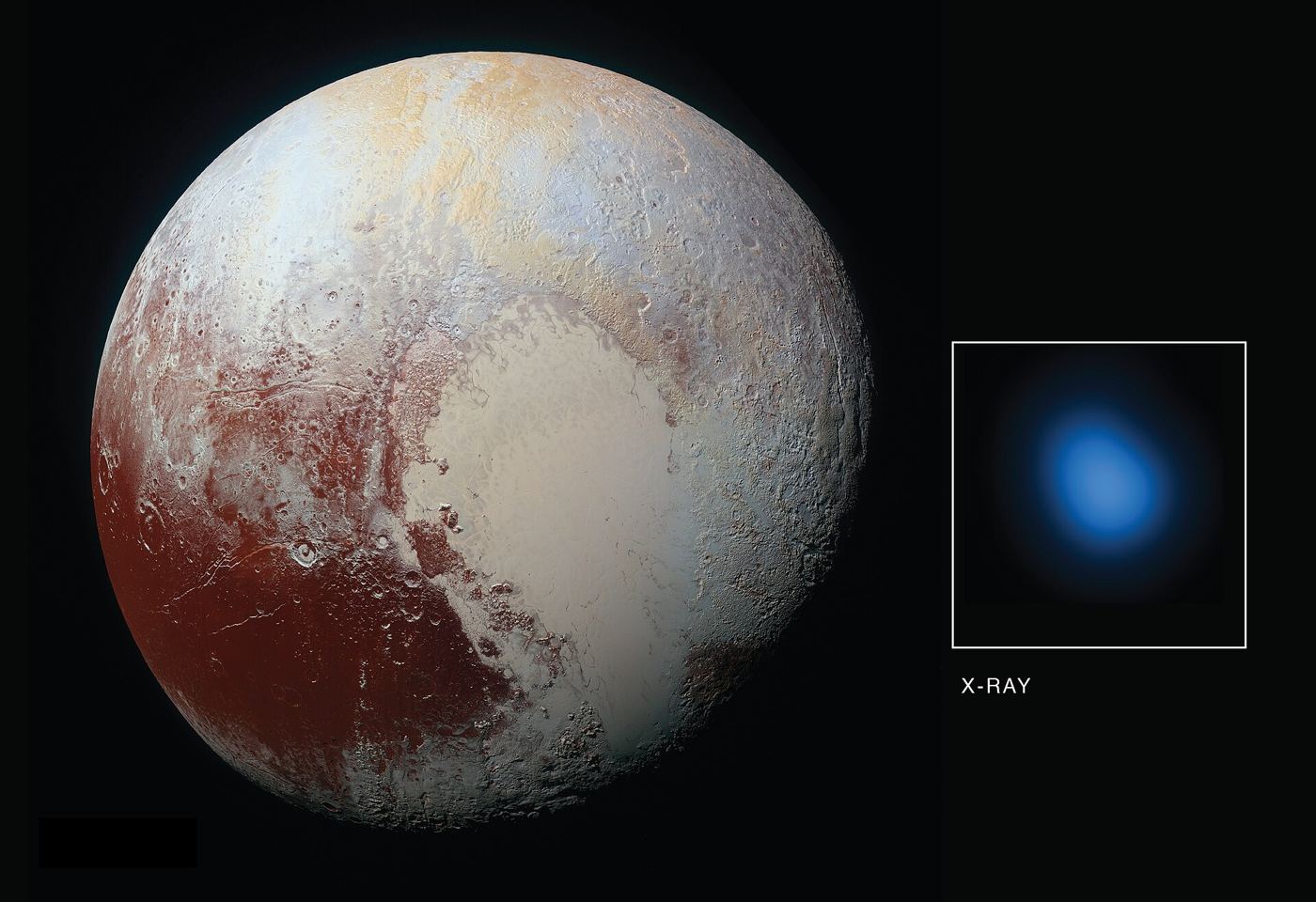
NASA scientists studying tiny grains of space dust collected high in Earth’s atmosphere have found evidence of an ancient reservoir of ice in the Kuiper Belt, the distant region beyond Neptune. The study, reported on 18 November 2026, analysed 12 dust particles collected from the stratosphere by NASA’s ER-2 high-altitude research aircraft. Researchers at NASA’s Johnson Space Center in Houston, working with colleagues at the University of California, Los Angeles, used electron microscopy and an ion microprobe to study the particles’ minerals and oxygen isotopes. High concentrations of tracks left by energetic particles from the Sun helped trace the dust back to the Kuiper Belt. The particles contain minerals that formed when water interacted with dust early in the solar system’s history, and their chemical signatures show the ancient water was enriched in heavier oxygen isotopes.
What the Evidence Shows
The finding offers new insight into how materials were distributed through the early solar system and contributed to planet formation. The Kuiper Belt is a ring of icy bodies beyond Neptune, including the dwarf planets Pluto, Haumea and Makemake, and it is thought to be a remnant of the disc of gas and dust from which the planets formed. Dust from the belt drifts inward over millions of years, and some of it is swept up by Earth’s atmosphere, where aircraft can collect it. By reading the chemistry of a dozen microscopic grains, the team could infer conditions in a region no spacecraft has sampled directly. The researchers say the work shows that reservoirs of ancient water survived in the outer solar system, preserved in ice for more than four billion years. Reporting and analysis from sources such as NASA track the same developments, and specialists following the ancient ice reservoir beyond Neptune say the direction is now consistent across independent lines of evidence.
The Wider Context
Funding bodies are watching the ancient ice reservoir beyond Neptune closely because the work sits at the junction of basic curiosity and practical return. Grant panels increasingly ask for a path from discovery to application, while researchers push back that the most valuable uses of fundamental science are rarely the ones written into the original proposal. The tension is productive when both sides stay honest about timescales.
What Happens Next
The long view on the ancient ice reservoir beyond Neptune is that fields advance by accumulation rather than by single announcements. This result adds a solid, checkable piece to a structure many teams are building, and its authors have shared their data so the piece can be tested from every side. That is how the picture eventually becomes reliable enough to act on. You can follow related developments in our coverage of science.
It is also worth remembering how quickly the picture in this area has changed before. Positions that looked settled a few years ago have been revised as new data arrived, and the same humility is appropriate now. The strongest coverage of this subject, and the most useful advice, tends to come from sources that update their views openly when the facts move, rather than defending an earlier position long after it has stopped fitting the evidence available.
